

Stop Bleeding Rent: How Smart Market Slashes Vacancy Costs

Stop Bleeding Rent: How Smart Market Timing Slashes Vacancy Costs
Rental market timing is the practice of aligning listing, leasing, and renewal activities with periods of high renter demand and low competing supply. For landlords managing 1 to 100 units, even shaving one week off a vacancy period can recover more income than a modest annual rent increase. A unit renting at $1,650 per month with $300 in monthly operating expenses costs approximately $65 per day when vacant. One poorly timed 20-day gap erases more than a 3% annual rent bump before a single improvement is made to the property.
Most landlords lose this money not from bad management but from bad timing. A lease that ends in January creates a vacancy during the slowest leasing month of the year. The same unit, with a lease engineered to expire in July, fills in days rather than weeks. The calendar is the lever, and most landlords are not using it.
Why Market Timing Matters More Than Most Landlords Realize
Renter search traffic and applications peak nationally in late May and June. Winter months from December through February are the slowest leasing period of the year, with more concessions and longer days on market. Regional patterns vary: Sun Belt metros with high new supply tend to show flatter seasonal premiums, while Midwestern cities retain stronger summer rent lifts.
Asset type also matters. Single-family homes attract families who prefer summer moves aligned with school calendars. Urban studios lease faster in spring. Hyper-local signals including university calendars, employer hiring cycles, and neighborhood events can create demand windows that do not show up in national data.
Tracking your own days-on-market history by unit and season is the most accurate way to identify the demand windows that apply to your specific portfolio.
Four Levers That Put Timing in Your Control
Lease-term engineering is the most underused tool in a small landlord's toolkit. The standard 12-month lease defaults to whatever expiration date the first signing happened to produce. Offering 9-, 10-, 13-, or 15-month terms at lease signing or renewal gives landlords a mechanism to gradually realign expirations with peak demand months without forcing tenants into uncomfortable ultimatums. A framing like "10-month term at current rent or 12 months at a $15 increase" gives tenants a real choice while moving the landlord toward a better expiration window.
Renewal negotiation windows should open 90 days before lease end at minimum, and earlier for leases expiring in winter. Starting the conversation late leaves no room to adjust terms, address tenant concerns, or pivot to marketing if renewal is unlikely. Sharing local data on seasonal demand during the renewal conversation, such as the fact that June rents average slightly higher and fill faster, gives tenants context for a term adjustment rather than making it feel arbitrary.
Dynamic pricing windows require a willingness to price slightly below market in off-peak months to avoid prolonged vacancy, and to aim for the upper quartile of comparable units during peak months. A small rent premium in June or July disappears entirely if the unit sits idle for five extra days while trying to capture it. A useful signal: more than eight showings without an application typically indicates the unit is overpriced for current demand.
Flexible move-in dates and targeted concessions close the gap between what the market offers and what your calendar requires. Advertising availability up to 30 days before a unit vacates captures prospective tenants who are planning ahead. In slow months, a one-time $200 concession often costs less than 10 vacant days at $65 per day. Prorated partial months allow move-in dates to align with peak demand without requiring tenants to double up on rent.
The Numbers Behind One Smart Term Decision
Consider a one-bedroom unit in a mid-sized city renting at $1,800 per month with $300 in monthly operating expenses. Daily vacancy cost is approximately $70.
A lease that ends January 31 and re-leases February 15 produces 15 vacant days at $70, or $1,050 in losses.
The same unit, with an 11-month term offered the prior year to shift the expiration to July 31, re-leases in 3 days. Vacancy cost: $210.
Savings from one term adjustment: $840, roughly half a month's rent. Across four units over five years, that difference compounds to approximately $17,000 in preserved net operating income.
The math is not complicated. The discipline is in applying it consistently rather than defaulting to 12-month terms out of habit.
Common Timing Mistakes That Cost Landlords Money
Chasing top-of-market rent in off-season months is one of the most expensive timing errors a landlord can make. Being 2% overpriced in January can add weeks of vacancy that no future rent increase will recover.
Allowing leases to auto-renew month-to-month eliminates control over expiration timing entirely and almost guarantees future winter vacancies.
Overlapping turnovers across multiple units in the same portfolio double cash-flow strain and stretch vendor availability, extending the vacant period for each unit.
Ignoring regional supply pipelines means missing the signal that new construction is about to increase competition in your submarket, which shifts the pricing and timing calculus for that leasing season.
How Shuk Supports Market Timing
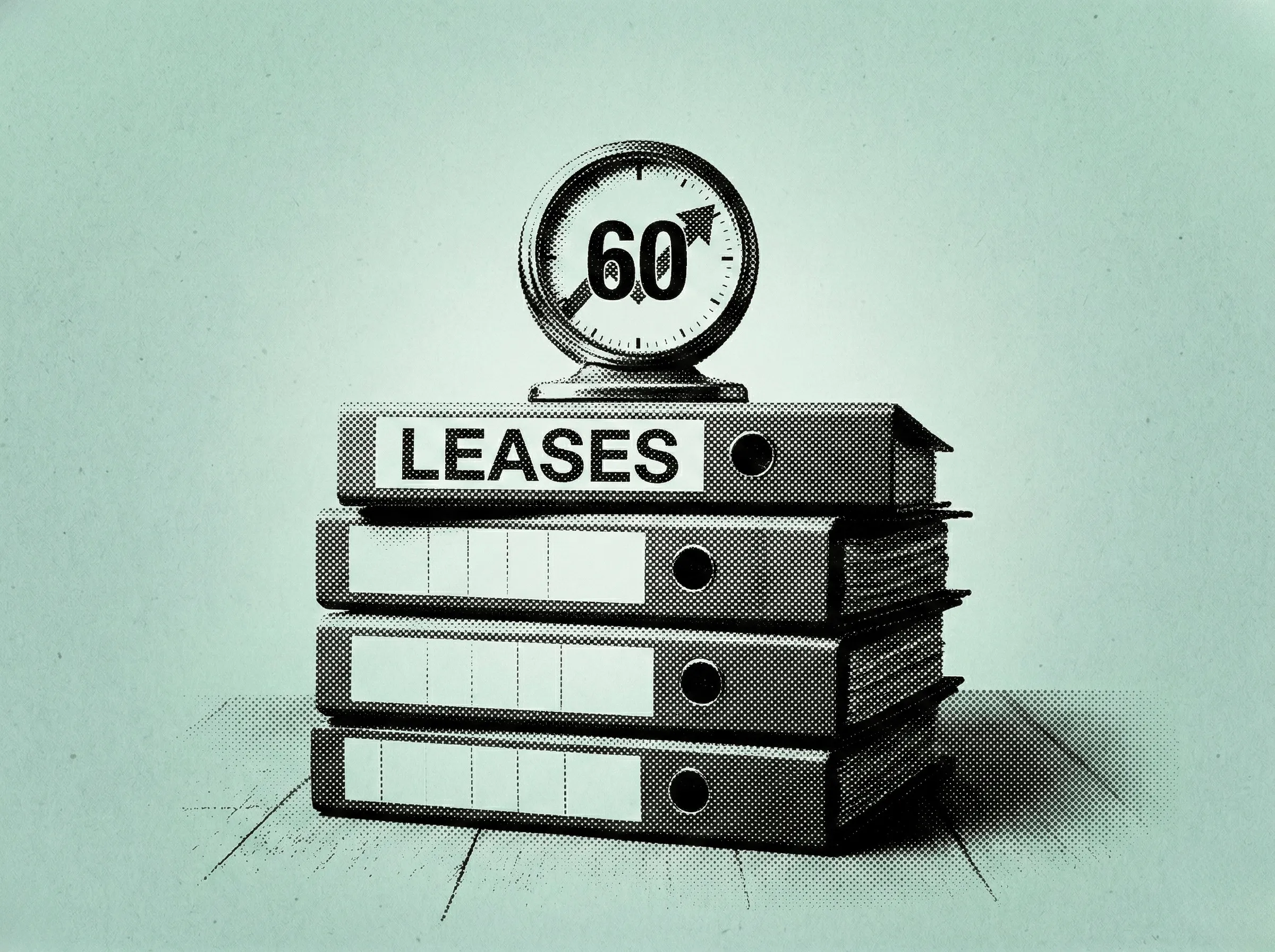
Shuk's Lease Indication Tool polls tenants monthly beginning six months before lease end, giving landlords early renewal signals at the 120-, 90-, and 60-day marks. That visibility allows landlords to begin renewal conversations or marketing preparation well before tenants start shopping elsewhere, with enough runway to adjust term lengths and pricing before the window closes.
Year-round listing visibility on Shuk keeps properties discoverable even when occupied, showing upcoming availability to prospective tenants who are planning ahead. Landlords who maintain continuous listings build a warm pipeline between leases rather than restarting from zero at every turnover.
Frequently Asked Questions
What is rental market timing and why does it matter for landlords?
Rental market timing is the practice of aligning listing, leasing, and renewal activities with periods of high renter demand and low supply. Renter search activity peaks nationally in late May and June and drops significantly from December through February. A unit that vacates in winter takes longer to fill and often requires concessions. Aligning lease expirations with peak demand months is one of the highest-return adjustments a self-managing landlord can make.
How much does poor lease timing actually cost?
Daily vacancy cost equals monthly rent plus operating expenses divided by 30. For a unit at $1,800 rent with $300 in monthly expenses, that is $70 per day. A lease that ends in January and takes 15 days to fill costs $1,050 in vacancy losses. The same unit with an expiration timed to July, filling in 3 days, costs $210. The difference from one term adjustment is $840. Across multiple units over several years, timing gaps compound into significant lost income.
What lease terms help avoid off-season vacancies?
Offering 9-, 10-, 13-, or 15-month lease terms at signing or renewal allows landlords to gradually realign expirations with peak demand months without requiring large rent adjustments. The key is framing the option as a choice rather than a requirement. For multi-unit portfolios, staggering expirations across different months also prevents overlapping turnovers that strain cash flow and vendor availability simultaneously.
When should a landlord start a renewal conversation?
Renewal conversations should begin at least 90 days before lease end, and earlier for leases expiring in winter when demand is lowest. Starting late leaves no time to adjust terms, address tenant concerns, or prepare marketing if the tenant plans to leave. For winter expirations, beginning outreach 120 days in advance gives enough runway to offer a term adjustment that shifts the next expiration into a more favorable leasing season.
Is it better to offer a concession or hold firm on rent during slow leasing months?
In most cases, a targeted one-time concession costs less than extended vacancy. For a unit generating $70 per day in vacancy costs, a $200 move-in concession breaks even at fewer than three vacant days. Holding firm on rent during off-peak months while the unit sits empty for an additional week or two typically produces a larger financial loss than the concession amount. Price slightly below the upper quartile of comparable units during slow months and aim for premium pricing during peak demand periods.
Schedule a quick demo to receive a free trial and see how data-driven tools make rental management easier.
Stop Bleeding Rent: How Smart Market Timing Slashes Vacancy Costs
Rental market timing is the practice of aligning listing, leasing, and renewal activities with periods of high renter demand and low competing supply. For landlords managing 1 to 100 units, even shaving one week off a vacancy period can recover more income than a modest annual rent increase. A unit renting at $1,650 per month with $300 in monthly operating expenses costs approximately $65 per day when vacant. One poorly timed 20-day gap erases more than a 3% annual rent bump before a single improvement is made to the property.
Most landlords lose this money not from bad management but from bad timing. A lease that ends in January creates a vacancy during the slowest leasing month of the year. The same unit, with a lease engineered to expire in July, fills in days rather than weeks. The calendar is the lever, and most landlords are not using it.
Why Market Timing Matters More Than Most Landlords Realize
Renter search traffic and applications peak nationally in late May and June. Winter months from December through February are the slowest leasing period of the year, with more concessions and longer days on market. Regional patterns vary: Sun Belt metros with high new supply tend to show flatter seasonal premiums, while Midwestern cities retain stronger summer rent lifts.
Asset type also matters. Single-family homes attract families who prefer summer moves aligned with school calendars. Urban studios lease faster in spring. Hyper-local signals including university calendars, employer hiring cycles, and neighborhood events can create demand windows that do not show up in national data.
Tracking your own days-on-market history by unit and season is the most accurate way to identify the demand windows that apply to your specific portfolio.
Four Levers That Put Timing in Your Control
Lease-term engineering is the most underused tool in a small landlord's toolkit. The standard 12-month lease defaults to whatever expiration date the first signing happened to produce. Offering 9-, 10-, 13-, or 15-month terms at lease signing or renewal gives landlords a mechanism to gradually realign expirations with peak demand months without forcing tenants into uncomfortable ultimatums. A framing like "10-month term at current rent or 12 months at a $15 increase" gives tenants a real choice while moving the landlord toward a better expiration window.
Renewal negotiation windows should open 90 days before lease end at minimum, and earlier for leases expiring in winter. Starting the conversation late leaves no room to adjust terms, address tenant concerns, or pivot to marketing if renewal is unlikely. Sharing local data on seasonal demand during the renewal conversation, such as the fact that June rents average slightly higher and fill faster, gives tenants context for a term adjustment rather than making it feel arbitrary.
Dynamic pricing windows require a willingness to price slightly below market in off-peak months to avoid prolonged vacancy, and to aim for the upper quartile of comparable units during peak months. A small rent premium in June or July disappears entirely if the unit sits idle for five extra days while trying to capture it. A useful signal: more than eight showings without an application typically indicates the unit is overpriced for current demand.
Flexible move-in dates and targeted concessions close the gap between what the market offers and what your calendar requires. Advertising availability up to 30 days before a unit vacates captures prospective tenants who are planning ahead. In slow months, a one-time $200 concession often costs less than 10 vacant days at $65 per day. Prorated partial months allow move-in dates to align with peak demand without requiring tenants to double up on rent.
The Numbers Behind One Smart Term Decision
Consider a one-bedroom unit in a mid-sized city renting at $1,800 per month with $300 in monthly operating expenses. Daily vacancy cost is approximately $70.
A lease that ends January 31 and re-leases February 15 produces 15 vacant days at $70, or $1,050 in losses.
The same unit, with an 11-month term offered the prior year to shift the expiration to July 31, re-leases in 3 days. Vacancy cost: $210.
Savings from one term adjustment: $840, roughly half a month's rent. Across four units over five years, that difference compounds to approximately $17,000 in preserved net operating income.
The math is not complicated. The discipline is in applying it consistently rather than defaulting to 12-month terms out of habit.
Common Timing Mistakes That Cost Landlords Money
Chasing top-of-market rent in off-season months is one of the most expensive timing errors a landlord can make. Being 2% overpriced in January can add weeks of vacancy that no future rent increase will recover.
Allowing leases to auto-renew month-to-month eliminates control over expiration timing entirely and almost guarantees future winter vacancies.
Overlapping turnovers across multiple units in the same portfolio double cash-flow strain and stretch vendor availability, extending the vacant period for each unit.
Ignoring regional supply pipelines means missing the signal that new construction is about to increase competition in your submarket, which shifts the pricing and timing calculus for that leasing season.
How Shuk Supports Market Timing
Shuk's Lease Indication Tool polls tenants monthly beginning six months before lease end, giving landlords early renewal signals at the 120-, 90-, and 60-day marks. That visibility allows landlords to begin renewal conversations or marketing preparation well before tenants start shopping elsewhere, with enough runway to adjust term lengths and pricing before the window closes.
Year-round listing visibility on Shuk keeps properties discoverable even when occupied, showing upcoming availability to prospective tenants who are planning ahead. Landlords who maintain continuous listings build a warm pipeline between leases rather than restarting from zero at every turnover.
Frequently Asked Questions
What is rental market timing and why does it matter for landlords?
Rental market timing is the practice of aligning listing, leasing, and renewal activities with periods of high renter demand and low supply. Renter search activity peaks nationally in late May and June and drops significantly from December through February. A unit that vacates in winter takes longer to fill and often requires concessions. Aligning lease expirations with peak demand months is one of the highest-return adjustments a self-managing landlord can make.
How much does poor lease timing actually cost?
Daily vacancy cost equals monthly rent plus operating expenses divided by 30. For a unit at $1,800 rent with $300 in monthly expenses, that is $70 per day. A lease that ends in January and takes 15 days to fill costs $1,050 in vacancy losses. The same unit with an expiration timed to July, filling in 3 days, costs $210. The difference from one term adjustment is $840. Across multiple units over several years, timing gaps compound into significant lost income.
What lease terms help avoid off-season vacancies?
Offering 9-, 10-, 13-, or 15-month lease terms at signing or renewal allows landlords to gradually realign expirations with peak demand months without requiring large rent adjustments. The key is framing the option as a choice rather than a requirement. For multi-unit portfolios, staggering expirations across different months also prevents overlapping turnovers that strain cash flow and vendor availability simultaneously.
When should a landlord start a renewal conversation?
Renewal conversations should begin at least 90 days before lease end, and earlier for leases expiring in winter when demand is lowest. Starting late leaves no time to adjust terms, address tenant concerns, or prepare marketing if the tenant plans to leave. For winter expirations, beginning outreach 120 days in advance gives enough runway to offer a term adjustment that shifts the next expiration into a more favorable leasing season.
Is it better to offer a concession or hold firm on rent during slow leasing months?
In most cases, a targeted one-time concession costs less than extended vacancy. For a unit generating $70 per day in vacancy costs, a $200 move-in concession breaks even at fewer than three vacant days. Holding firm on rent during off-peak months while the unit sits empty for an additional week or two typically produces a larger financial loss than the concession amount. Price slightly below the upper quartile of comparable units during slow months and aim for premium pricing during peak demand periods.
Schedule a quick demo to receive a free trial and see how data-driven tools make rental management easier.
{
"@context": "https://schema.org",
"@type": "FAQPage",
"mainEntity": [
{
"@type": "Question",
"name": "What is rental market timing and why does it matter for landlords?",
"acceptedAnswer": {
"@type": "Answer",
"text": "Rental market timing is the practice of aligning listing, leasing, and renewal activities with periods of high renter demand and low supply. Renter search activity peaks nationally in late May and June and drops significantly from December through February. A unit that vacates in winter takes longer to fill and often requires concessions. Aligning lease expirations with peak demand months is one of the highest-return adjustments a self-managing landlord can make."
}
},
{
"@type": "Question",
"name": "How much does poor lease timing actually cost?",
"acceptedAnswer": {
"@type": "Answer",
"text": "Daily vacancy cost equals monthly rent plus operating expenses divided by 30. For a unit at $1,800 rent with $300 in monthly expenses, that is $70 per day. A lease that ends in January and takes 15 days to fill costs $1,050 in vacancy losses. The same unit with an expiration timed to July, filling in 3 days, costs $210. The difference from one term adjustment is $840. Across multiple units over several years, timing gaps compound into significant lost income."
}
},
{
"@type": "Question",
"name": "What lease terms help avoid off-season vacancies?",
"acceptedAnswer": {
"@type": "Answer",
"text": "Offering 9-, 10-, 13-, or 15-month lease terms at signing or renewal allows landlords to gradually realign expirations with peak demand months without requiring large rent adjustments. The key is framing the option as a choice rather than a requirement. For multi-unit portfolios, staggering expirations across different months also prevents overlapping turnovers that strain cash flow and vendor availability simultaneously."
}
},
{
"@type": "Question",
"name": "When should a landlord start a renewal conversation?",
"acceptedAnswer": {
"@type": "Answer",
"text": "Renewal conversations should begin at least 90 days before lease end, and earlier for leases expiring in winter when demand is lowest. Starting late leaves no time to adjust terms, address tenant concerns, or prepare marketing if the tenant plans to leave. For winter expirations, beginning outreach 120 days in advance gives enough runway to offer a term adjustment that shifts the next expiration into a more favorable leasing season."
}
},
{
"@type": "Question",
"name": "Is it better to offer a concession or hold firm on rent during slow leasing months?",
"acceptedAnswer": {
"@type": "Answer",
"text": "In most cases, a targeted one-time concession costs less than extended vacancy. For a unit generating $70 per day in vacancy costs, a $200 move-in concession breaks even at fewer than three vacant days. Holding firm on rent during off-peak months while the unit sits empty for an additional week or two typically produces a larger financial loss than the concession amount. Price slightly below the upper quartile of comparable units during slow months and aim for premium pricing during peak demand periods."
}
}
]
}
Shuk helps landlords and property managers get ahead of vacancies, improve renewal visibility, and bring more predictability to every lease cycle.
Book a demo to get started with a free trial.

Understanding the 3-3-3 Rule in Real Estate
Most independent landlords do not lose money because they cannot analyze deals. They lose money because they analyze the wrong metrics at the wrong time.
A property that looks solid on closing day can turn into a cash drain after the first tenant cycle. Another deal that feels tight in month one might become a portfolio cornerstone once operations stabilize and rents reset. A third property might deliver mediocre early cash flow but build meaningful wealth over 30 years through amortization, inflation-adjusted rent growth, and a smart refinance strategy.
Here is the problem the 3-3-3 Rule solves: it forces you to underwrite an acquisition across three distinct time horizons, three months, three years, and three decades, so you do not confuse "survives onboarding" with "performs as a business" or "builds long-term wealth." The framework is a phased evaluation method designed to reduce time-horizon mistakes in acquisition decisions.
Common examples of this mistake: A great cash-on-cash return that ignored vacancies and capital expenditures, then collapsed after the first HVAC replacement. A rent projection that assumed perfect renewal behavior, but churn forced constant leasing and concessions. A long-term plan that assumed refinancing later without tracking debt service coverage ratio, which most lenders and investors prefer at approximately 1.25 or above for adequate cushion.
Treat the 3-3-3 Rule as a sequence, not a slogan. Pass the three-month stress test first, then earn the right to plan the three-year reposition, then decide whether the 30-year hold fits your life and portfolio.
What Each "3" Is Actually Asking
The 3-3-3 Rule is a decision framework for buy-and-hold investing that evaluates a property through three lenses.
The first three months ask whether the property can stabilize operationally and validate assumptions. This is the horizon of operational truth: are repairs, leasing, rent collection, and tenant onboarding working the way you underwrote?
The first three years ask whether the property can prove durable economics through at least one to three tenant cycles. Do you have a repeatable leasing engine, a predictable expense profile, and a realistic rent strategy? This is a classic hold versus refinance versus sell decision point.
The next three decades ask whether the property builds wealth through amortization, appreciation, and inflation-linked rent growth, and whether it matches your long-term exit and lifestyle goals. Historical U.S. rent growth averages approximately 2.5% annually, with NAR forecasting approximately 3.1% growth for 2026, but local underwriting always takes precedence over national averages.
The reason these distinctions matter in practice: a duplex may pass the three-month test but fail the three-year test if expenses drift and rents never get reset. An eight-unit may fail early if occupancy is unstable even when the long-term neighborhood story is strong. A high-cost market deal may be thin on cash flow but still represent a valid 30-year plan if you have reserves and financing flexibility.
Use different metrics at different horizons. Gross rent multiplier and a quick DSCR check for the first pass, a full operating expense ratio and rent and renewal plan for the three-year view, then IRR and refinance and exit scenarios for the 30-year view. Note that GRM ignores expenses and vacancy, making it a screening tool rather than a decision tool. IRR can mislead if reinvestment assumptions or timing are unrealistic.
How to Apply the 3-3-3 Rule: Six Steps
Step 1. Run the Three-Month Stabilization Stress Test
The first 90 days are about proving your assumptions around rent collection, repair cadence, and tenant fit. The goal is not perfection. It is avoiding a deal that requires constant emergency cash infusions.
Metrics to track in the first three months: Actual versus pro forma rent collected including timing and delinquencies. Initial maintenance and make-ready costs. Vacancy and lease-up time. A basic DSCR check using real expenses rather than projected figures.
Concrete examples: If your duplex underwriting assumed $300 per month in maintenance but month one required a $1,800 plumbing repair, your three-month truth is that reserves matter more than the spreadsheet. If you priced rent at the top of the market and attracted many inquiries but low-quality applicants, your screening and pricing strategy needs adjustment rather than patience. If one unit sits vacant longer than expected, your leasing system covering photos, follow-up speed, and listing distribution is the real bottleneck rather than the market.
Shuk's continuous marketing approach supports faster stabilization by keeping demand active rather than posting once and waiting. Use Shuk's workflow and performance tracking to watch early leasing and rent collection patterns in one place so month-one surprises become measurable inputs rather than vague stress.
Define a three-month pass-fail threshold before closing: if stabilization requires more than a specified amount in unexpected repairs or occupancy cannot reach a target level by month three, pause new acquisitions and rebuild reserves.
Step 2. Build a 12-Month Operating Model
The bridge between three months and three years is a realistic first-year model. This is where independent landlords most commonly underwrite too optimistically, especially around vacancy, capital expenditures, and expense creep.
Metrics to track in the first year: Net operating income calculated as income minus operating expenses. Operating expense ratio, often benchmarked in the 35% to 50% range depending on property type and market, with a high ratio signaling maintenance intensity or operational inefficiency. Cash-on-cash return calculated as annual pre-tax cash flow divided by cash invested, used carefully because it can ignore long-term drivers and mislead when capital expenditures and vacancies are under-modeled.
Concrete examples: A property with a great cash-on-cash return can still be fragile if it is one significant repair away from negative cash flow. A low operating expense ratio in month two can be a mirage if you have not yet experienced a turnover or a major service call. A DSCR that looks adequate on projected rents can drop quickly if insurance or taxes reset higher than expected.
Do not rely on a single metric. Combine operating expense ratio with DSCR and a conservative vacancy and capital expenditure line so you can distinguish "temporarily tight" from "structurally risky."
Step 3. Underwrite the Three-Year Proof
The three-year horizon is where rentals either become predictable businesses or remain owner-dependent side projects. This window is about verifying economic performance and serves as a decision point to hold, refinance, or sell.
Metrics to track through year three: Occupancy trend, where stability matters more than perfection since ultra-high occupancy can hide deferred turns and maintenance. Rent growth relative to local context and the historical U.S. average. Turnover and renewal performance, since leasing costs and downtime are portfolio profitability killers. Expense drift across taxes, insurance, utilities, and repairs.
Concrete examples: If your duplex renewals are strong, you can plan measured rent increases and reduce make-ready costs, improving the three-year outcome without major renovations. If your eight-unit has frequent move-outs, the cap rate on paper is irrelevant because the business is leaking money through vacancy and turns. If expenses rise faster than rents, you need operational changes around utility billing, preventive maintenance, or vendor renegotiation before adding doors.
Shuk's predictive renewal insights map directly to the three-year proof window. Knowing which tenants are likely to renew and why helps you plan pricing, maintenance timing, and marketing lead time so you are not reacting at day 28 of a 30-day notice.
Make year three your formal portfolio checkpoint. Decide in advance what performance triggers a refinance attempt, a rent-reset renovation, or a sale.
Step 4. Design the Three-Decade Wealth Plan
Thirty years is where rentals become a wealth strategy rather than just an income stream. The 30-year view centers on wealth accumulation through amortization, appreciation, and inflation-adjusted rent growth.
Metrics to track over ten to thirty years: Amortization and equity buildup, noting that early payments are interest-heavy and principal paydown accelerates later. Long-term return measures like IRR, useful for comparing scenarios across time but potentially misleading if reinvestment assumptions are unrealistic. Refinance feasibility through DSCR and cash-flow stability. Exit strategies including selling, executing a 1031 exchange if applicable, or holding for debt-free cash flow, all of which depend on your specific situation and tax circumstances.
Concrete examples: A property that breaks even early can become strong as rents rise while a fixed-rate payment stays constant, creating an inflation tailwind that compounds over time. A refinance may reduce risk through a longer term or fixed rate, or increase it through a rate reset, depending entirely on DSCR and the rate environment at the time. A 30-year plan without capital expenditure lifecycle budgeting is incomplete. Roofs, HVAC systems, and building exteriors do not respect your pro forma.
Use Shuk's historical performance views and analytics to produce lender-ready operating statements and trend lines when you revisit financing or consider portfolio expansion. Treat financing as a timeline rather than a one-time choice. Underwrite at least two paths: hold with current debt, and refinance in years three to seven if DSCR and NOI hit targets.
Step 5. Run Two Scenarios End to End
Scenario A: $250,000 duplex
Purchase price $250,000. Rents at $1,300 per unit equal $2,600 per month gross. Assuming 5% vacancy, effective gross is approximately $2,470 per month. If the operating expense ratio trends toward 45%, NOI is approximately $1,359 per month. If debt service is $1,200 per month, DSCR is approximately 1.13, which is thin.
Three-month decision: If the first turnover costs $4,000 and one tenant pays late twice, the deal may still be viable but only if reserves and leasing systems are strong. Use continuous marketing so you are never starting from zero on demand. Three-year decision: If predictive renewal indicators suggest one tenant is unlikely to renew, you can pre-market early, schedule upgrades between leases, and protect occupancy. Thirty-year decision: If rents grow near long-run historical averages and debt amortizes over time, this can shift from thin to strong, but only if year-one expense discipline is genuine.
Scenario B: $900,000 eight-unit building
Purchase price $900,000. Rents at $1,250 per unit equal $10,000 per month gross. Assuming 6% vacancy, effective gross is approximately $9,400 per month. At a 50% operating expense ratio, NOI is approximately $4,700 per month. With debt service of $4,000 per month, DSCR is approximately 1.18.
Three-month decision: The key risk is stabilization. One vacant unit and one delinquency can swing results significantly. Track leasing velocity and tighten collections immediately. Three-year decision: This is where operational scale pays off. Renewal forecasting and continuous marketing reduce vacancy loss across multiple units simultaneously. Thirty-year decision: If you plan to refinance after NOI improves, you need clean operating history and a DSCR cushion. Do not underwrite a refinance that only works under perfect rent growth assumptions.
In both scenarios, the rule is not the math. It is the discipline to re-evaluate the deal at three months and three years using real performance rather than hopeful projections.
Step 6. Avoid Common Pitfalls and Build Your Risk Playbook
The 3-3-3 Rule can overwhelm newer investors if treated as a giant spreadsheet rather than phased checkpoints. The tracking intensity can feel heavy without good tooling, which is a legitimate critique of any multi-horizon framework.
Common pitfalls and fixes: Over-relying on cash-on-cash. Pair it with operating expense ratio, DSCR, and a capital expenditure reserve line. Using GRM to decide rather than to screen. GRM ignores expenses and vacancy, so use it as a first filter and then underwrite NOI. Assuming rent growth will bail out bad operations. Let renewals, occupancy stability, and expense control be your three-year proof points rather than growth projections.
Software reduces blind spots rather than just adding data. Shuk's predictive renewal insights and continuous marketing reduce two of the largest small-landlord risks: surprise vacancy and reactive leasing. Its analytics dashboards help keep each "3" measurable without building a custom reporting stack.
Write a one-page playbook for each horizon: if a specific event happens in three months, execute this response. If a key performance indicator is missed by year three, refinance, sell, or reposition.
3-3-3 Rule Checklist and Template
Three-month stabilization checklist: Confirm actual rent collected versus underwritten rent including timing and delinquencies. Track vacancy days and leasing lead volume. Log all repairs and categorize by safety, habitability, preventive, and upgrade. Run a quick DSCR check using real expenses. Set a minimum cash reserve threshold for surprises.
12-month operating template for year one: Monthly income covering base rent and fees. Vacancy and credit loss line item. Operating expenses with categories covering taxes, insurance, utilities, maintenance, and administration. Operating expense ratio target in the 35% to 50% range. Annual cash-on-cash calculated carefully with capital expenditures and turnovers included.
Three-year proof checklist: Occupancy trend and turnover count. Renewal rate trend with reasons for move-outs categorized by pricing, maintenance, and life events. Rent increase policy tied to market conditions and tenant retention goals. Expense drift across taxes, insurance, and repairs with explanations for increases. Decision gate covering hold versus reposition versus refinance versus sell.
Thirty-year design checklist: Financing plan covering fixed versus adjustable rate risk. Amortization awareness noting that principal paydown accelerates in later years. Long-term return view using IRR as one tool with sanity-checked assumptions. Exit options and timeline aligned with life and portfolio goals.
If you cannot fill a line item confidently, that is not a reason to guess. It is a reason to investigate further or renegotiate terms before closing.
Frequently Asked Questions
How is the 3-3-3 Rule different from the 1% rule or other quick screens?
Quick rules focus on immediate rent-to-price relationships. The 3-3-3 Rule is broader: it tests whether a deal can stabilize in three months, prove sustainable economics over three years, and build long-term wealth over three decades. It is designed to reduce time-horizon mistakes and prevent judging a long-term asset by short-term performance snapshots.
Can I use the 3-3-3 Rule for a house flip?
It can inform risk thinking but is designed for rentals and phased hold decisions. A flip is primarily a short-duration execution and resale spread business. The three-month lens may still be useful for scope, burn rate, and timeline management, but the three-year and three-decade lenses will not map cleanly to a flip scenario.
What if capital expenditures are unpredictable? Does that break the framework?
No. It is exactly why the framework exists. The first three months reveal maintenance reality, and the first three years reveal repeatability. Use operating expense ratio benchmarks as a reference point and track expense drift explicitly rather than hoping it stays within original projections.
Does the rule work in high-cost markets with low initial cash flow?
Often yes, if you are intentional about the 30-year plan and have reserves for the three-month and three-year phases. Long-run rent growth context provides a tailwind, but you still need local underwriting and strong operations. A thin early cash flow supported by strong fundamentals and disciplined expense management is a different risk profile than a thin cash flow produced by poor underwriting.
Apply the 3-3-3 Rule to the deals you are already evaluating. Pick one property in your pipeline. Run the three-month stabilization stress test and a 12-month operating model. Set your three-year decision gate with explicit hold, refinance, and sell triggers. Use Shuk to track leasing performance, get predictive renewal insights, keep continuous marketing running, and monitor KPIs in analytics dashboards so each "3" is based on real performance rather than memory or projection.
Book a demo to see how the 3-3-3 workflow operates in Shuk and how the platform's renewal intelligence, continuous marketing, and performance tracking support each phase of the framework.
What Property Managers Actually Do (And What You Can Do Yourself)
Property management is the set of systems a landlord or hired professional uses to protect rental income, maintain property condition, and stay legally compliant. A full-service property manager handles nine core functions: marketing, leasing, tenant screening, rent collection, maintenance coordination, inspections, bookkeeping, legal compliance, and evictions. For landlords managing 1-100 units, understanding each function clarifies which tasks can be handled independently with the right tools and which carry enough risk to warrant professional support.
The hidden costs of managing rentals without structure are real. One vacant month can erase a year of careful budgeting. Tenant turnover averages around $3,872 per unit once lost rent, make-ready costs, marketing, and concessions are combined. An eviction, when legal fees, lost rent, and damages are factored in, typically runs $3,500-$10,000. The better starting question is not "What does a property manager do?" It is: which tasks create the most risk and time pressure for your properties, and which ones can you systematize?
Traditional property managers earn their fee by running repeatable systems: consistent marketing, standardized screening, tight rent collection, controlled maintenance workflows, documented inspections, clean bookkeeping, compliance guardrails, and legally correct evictions when necessary. Many of those systems are no longer exclusive to professionals. With modern rental management software and a few simple operating procedures, small landlords can self-manage more than they might expect, as long as they are honest about their time, temperament, and risk tolerance.
This guide breaks down each core function and shows what you can realistically handle yourself, what is worth outsourcing, and what to do next.
The Core Job of a Property Manager and the DIY Decision Framework
A property manager's job is to protect income, asset condition, and legal compliance while reducing owner workload.
A full-service property manager typically covers nine operational functions:
- Marketing and advertising
- Leasing and showings
- Tenant screening and selection
- Rent collection and arrears management
- Maintenance coordination and vendor control
- Inspections (move-in, routine, move-out)
- Bookkeeping and owner reporting
- Legal compliance and policy management
- Evictions and dispute escalation
Professional managers also track performance metrics like days-to-lease, collection rate, maintenance response time, and occupancy and turnover rates. That performance-oriented mindset is a significant part of the value: they do not just complete tasks, they run a measurable process.
The DIY vs. hire reality for small landlords (1-100 units)
You can self-manage successfully if:
- Your properties are near you, or you have reliable local support.
- You can respond to issues consistently.
- You are willing to document everything and follow fair, repeatable criteria.
You should strongly consider hiring or partial outsourcing if:
- You are remote, frequently unavailable, or emotionally reactive with tenants.
- You struggle with documentation, deadlines, or bookkeeping.
- Your local legal environment is strict and highly procedural.
Fees for traditional management commonly run 8-12% of monthly rent, plus leasing fees (often 50-100% of one month's rent), renewal fees, and sometimes maintenance markups. Those numbers matter because they create a direct comparison: if you can replicate most systems with software plus selective outsourcing (such as a leasing-only service, an accountant, and an eviction attorney), you may maintain control while lowering total cost.
The sections below break down each function with what it involves, difficulty and time, risk, DIY tools and systems, and a clear DIY vs. hire call.
For the complete self-management workflow covering all tasks, see the complete guide to self-managing rental properties.
Nine Property-Manager Functions You Can Demystify and Systematize
3.1 Marketing and Advertising (Keeping Vacancy from Quietly Eating Your Profit)
What it involves: Pricing, listing creation, photos and video, syndication to rental sites, lead tracking, and showing coordination. Managers also monitor days-to-lease because vacancy is a direct income leak.
Typical difficulty and time: Moderate difficulty; time spikes during turnover.
DifficultyTime per vacant unitBest DIY use caseMedium2-6 hours upfront + showing timeLocal landlord with flexible schedule
Risk if done poorly: Mispricing and slow response increase vacancy. Vacancy rates move with supply and demand cycles, so a "wait and see" approach can cost real money when markets soften.
DIY tools and systems:
- Listing templates covering features, pet policy, fees, and screening criteria
- Photo checklist with phone tripod and consistent lighting
- Lead tracker spreadsheet or CRM-style pipeline
- Auto-replies and pre-screen questions to reduce wasted showings
Actionable tip: Set a speed-to-lead standard: respond to inquiries within a few hours and pre-qualify before scheduling showings.
Examples:
- Pricing example: Your 2BR is listed at $2,200 with minimal inquiries. You pull 10 nearby comps and adjust to $2,095 plus a pet fee. Lead volume increases and you lease faster.
- Lead filtering example: You add three questions to your inquiry form (move-in date, number of occupants, and income minimum). You cut showings by half and still fill the unit.
DIY vs. hire guidance:
- DIY if you can take quality photos, respond quickly, and run showings.
- Hire if you are remote or cannot respond consistently. Vacancy is where "saving a fee" can become expensive.
For the full annual cost stack including placement and renewal fees, see the true cost of hiring a property manager.
3.2 Leasing and Showings (Turning a Prospect into a Signed, Enforceable Lease)
What it involves: Scheduling showings, answering questions consistently, providing applications, collecting holding deposits where legal, drafting lease addenda, and executing signatures.
Typical difficulty and time: Medium; operationally straightforward but detail-heavy.
DifficultyTime per lease cycleLegal sensitivityMedium4-10 hoursMedium-High
Risk if done poorly: Lease mistakes create enforceability problems. Inconsistent statements during showings can also create fair-housing risk.
DIY tools and systems:
- Digital applications and e-signatures
- Template lease package reviewed by a local attorney once, then reused
- Standard house rules addendum covering noise, trash, smoking, and parking
Actionable tip: Write a showing script so every prospect receives the same facts: rent, deposits, screening standards, occupancy limits, and pet policy. Consistency protects you legally and operationally.
Examples:
- Lease execution example: You require renters insurance, list it in the lease and in your move-in checklist, and verify proof before keys are released.
- Showing boundaries example: A prospect asks, "Is this a quiet building?" Rather than making a promise, you explain the building's quiet hours policy and enforcement steps, reducing future disputes.
DIY vs. hire guidance:
- DIY if you can follow a checklist and avoid improvising terms midstream.
- Hire (lease-only) if you dislike showings, travel often, or struggle with documentation.
3.3 Tenant Screening and Selection (Where Most "Bad Tenant" Stories Actually Start)
What it involves: Identity verification, income verification, credit and background checks, rental history review, reference calls, and consistent approval and denial logic.
Typical difficulty and time: Medium; emotionally challenging and administratively repetitive.
DifficultyTime per applicantRisk levelMedium20-60 minutesHigh
Risk if done poorly: The financial downside is significant. Research indicates that stronger screening can reduce eviction rates from 15.8% to 4.1%, with large ROI given that eviction costs typically total $3,500-$10,000. Fair Housing liability can also attach to owners and agents if screening is inconsistent or discriminatory.
DIY tools and systems:
- Written screening criteria covering income multiple, credit thresholds, and conditional approvals
- Integrated credit and background screening through landlord software
- Standardized adverse-action notice workflow
Actionable tip: Decide your criteria before you market. Apply the same criteria every time. That is both smarter and legally safer.
Examples:
- Income verification example: An applicant submits pay stubs. You also request last year's W-2 or an offer letter for new employment and confirm employer contact information before approving based on documented criteria.
- Rental history example: A prior landlord reference is positive, but the phone number traces back to the applicant. You require a property-tax record match or management company verification before counting it.
DIY vs. hire guidance:
- DIY if you can be consistent and comfortable declining applicants with documentation.
- Hire if you are uncertain about Fair Housing requirements, tend to rely on intuition, or feel pressure to bend your own rules.
3.4 Rent Collection and Arrears Management (Systems Beat Awkward Conversations)
What it involves: Payment methods, reminders, late fees where legal, payment plans where appropriate, notices, and delinquency tracking.
Typical difficulty and time: Low to medium with automation; high if you are chasing checks.
DifficultyTime per month per unitBiggest leverLow-Medium10-30 minutesAutopay + clear policy
Risk if done poorly: Cash-flow instability and delayed escalation. Surveys show late or non-payment is common: one landlord survey found 52% of landlords had at least one tenant not pay rent in a given month. Payment automation helps: autopay has been associated with 99% on-time rent versus 87% without it.
DIY tools and systems:
- Online payment portal with autopay
- Automated reminders and receipts
- Ledger that tracks rent, fees, credits, and partial payments
Actionable tip: Make autopay the default expectation. If you allow exceptions, require written requests and set an expiration date on the arrangement.
Examples:
- Autopay example: A tenant enrolls in autopay on move-in day. Late payments decrease and payment uncertainty is eliminated.
- Delinquency workflow example: Day 2 late = friendly reminder; Day 5 late = formal late notice; Day 8 late = legal notice per your state rules. Timelines vary by state.
DIY vs. hire guidance:
- DIY for most small landlords if you use online payments and follow a notice calendar.
- Hire if you dread confrontation or routinely delay sending notices.
3.5 Maintenance and Repairs (The Real Job Is Coordination, Not Fixing Toilets)
What it involves: Intake, triage of emergencies vs. routine issues, vendor dispatch, quotes, approval thresholds, quality control, and preventive maintenance scheduling.
Typical difficulty and time: Medium; spikes with older properties and tenant turnover.
DifficultyTime per month per unitCost variabilityMedium1-3 hoursHigh
Risk if done poorly: Habitability issues, property damage, and tenant dissatisfaction. Maintenance budgets are typically estimated at 1%-4% of property value annually. For a $300,000 property, that is roughly $3,000-$6,000 per year. Under-budgeting leads to deferred repairs and larger failures.
DIY tools and systems:
- Maintenance request portal with photo and video submission
- Vendor list with pricing guidelines and response-time expectations
- Preventive maintenance calendar covering HVAC filters, smoke and CO detectors, and gutter cleaning
Actionable tip: Use an approval threshold: any repair over $300 requires your sign-off; emergency repairs have pre-authorized rules in place.
Examples:
- Triage example: A tenant reports "water under sink." Your system asks for a photo. You identify a loose trap and schedule a handyman, preventing cabinet rot.
- Preventive example: Annual HVAC service reduces peak-season breakdowns and keeps tenants more satisfied.
DIY vs. hire guidance:
- DIY if you have reliable vendors and can respond quickly.
- Hire if you are remote, your building is maintenance-heavy, or you lack vendor relationships.
3.6 Inspections (Move-In, Routine, Move-Out: Documentation Equals Leverage)
What it involves: Condition documentation, safety checks, lease compliance, early detection of leaks and unauthorized occupants or pets, and deposit dispute defense.
Typical difficulty and time: Medium; requires thoroughness more than specialized skill.
Inspection typeTimePayoffMove-in45-90 minSets baseline evidenceRoutine20-45 minCatches issues earlyMove-out45-90 minSupports deposit deductions
Risk if done poorly: Deposit disputes and missed damage. Security deposit rules vary by state, and errors can trigger penalties.
DIY tools and systems:
- Photo checklist by room with cloud storage folder per unit
- Timestamped videos and signed inspection forms
- A repair responsibility chart (tenant vs. landlord) included in your welcome packet
Actionable tip: Conduct a short inspection 60-90 days after move-in. Many chronic issues, such as cleanliness problems or unauthorized pets, appear early.
Examples:
- Move-in baseline example: You photograph every wall, floor, appliance serial plate, and smoke detector. Six months later, any damage claim is clear and unemotional.
- Routine inspection example: You find a slow toilet leak that would have rotted the subfloor. A $25 part prevents a $2,500 repair.
DIY vs. hire guidance:
- DIY if you are local and comfortable being firm but professional.
- Hire if you are remote or conflict-avoidant; inspections require direct conversations.
3.7 Bookkeeping and Owner Reporting (Even If You Are the Owner, You Need "Owner Reports")
What it involves: Income and expense categorization, bank reconciliation, security deposit tracking, monthly statement generation, and tax-ready reporting.
Typical difficulty and time: Low to medium with systems; high if you mix accounts.
DifficultyTime per monthCommon failureLow-Medium1-3 hoursCommingling funds or missing receipts
Risk if done poorly: Tax mistakes, poor decision-making, and difficulty proving deductions. Professional PM operations emphasize standardized financial reporting for exactly this reason.
DIY tools and systems:
- Separate bank account per entity, or at minimum a dedicated rental account
- Receipt capture with expense tagging
- Monthly close checklist: reconcile accounts, review arrears, verify vendor bills
Actionable tip: Run your rentals like a small business. One chart of accounts, one monthly close day, one consistent folder structure.
Examples:
- Monthly close example: On the 3rd of each month you reconcile accounts and export a profit and loss report by property. You spot rising plumbing costs and schedule a proactive inspection.
- Deposit tracking example: You record deposits as liabilities, not income, and track them by tenant to avoid accidental spending.
DIY vs. hire guidance:
- DIY if you are organized and willing to do a monthly close.
- Hire a bookkeeper or CPA if receipts pile up or you dread reconciliation. Outsourcing this function is often high-ROI.
3.8 Legal Compliance (Fair Housing, Disclosures, Habitability: Where "I Didn't Know" Does Not Help)
What it involves: Fair Housing compliance, consistent screening criteria, required disclosures, lease legality, deposit timelines, habitability standards, notice requirements, and record retention.
Typical difficulty and time: Medium; requires ongoing vigilance.
DifficultyTimeStakesMediumOngoingVery high
Risk if done poorly: Fair Housing violations, lawsuits, fines, or forced policy changes. HUD's Fair Housing Act framework prohibits discriminatory practices and extends liability broadly to owners and agents. Property managers emphasize training and standardization because compliance is not optional.
DIY tools and systems:
- Written screening criteria with documented decisions
- A reasonable accommodation and modification request workflow
- A disclosure checklist customized to your state and property type
Actionable tip: Build a compliance binder (digital is fine) that includes your criteria, templates, disclosure receipts, notices, inspection reports, and communication logs in one place.
Examples:
- Consistency example: Two applicants request exceptions to your pet policy. You use the same documented process for each request rather than making a judgment call during a showing.
- Recordkeeping example: You keep every adverse-action notice and screening result for a set retention period. If questioned later, you can demonstrate that non-discriminatory criteria were applied consistently.
DIY vs. hire guidance:
- DIY if you are willing to learn your state rules and maintain strong records.
- Hire for attorney review and occasional consultations if you are uncertain. One consultation can prevent a much more expensive error.
3.9 Evictions and Dispute Escalation (The Point Where DIY Can Get Costly Fast)
What it involves: Serving correct notices, documenting non-payment and lease violations, filing in court, attending hearings, coordinating legal lockout where applicable, and managing post-judgment collections.
Typical difficulty and time: High complexity and high stress.
DifficultyTimeFinancial exposureHigh5-20+ hoursHigh (often $3,500-$10,000)
Risk if done poorly: Procedural mistakes reset the clock, increase lost rent, and can create liability. Strong screening is your first line of defense: research shows that improved screening can dramatically reduce eviction frequency.
DIY tools and systems:
- A delinquency timeline and documentation log
- Notice templates that match your state and city rules
- A relationship with a landlord-tenant attorney established before you need one
Actionable tip: Decide in advance what triggers escalation, such as "file on Day X if unpaid." Wavering prolongs losses.
Examples:
- Non-payment case: A tenant pays partial rent repeatedly. Without a policy, you accept partials and delay action. With a policy, you follow a structured notice-and-file timeline.
- Lease violation case: An unauthorized occupant is documented through inspection and communications. You issue a cure notice and track compliance; if not cured, you escalate.
DIY vs. hire guidance:
- DIY only if you have strong local procedural knowledge, time for court appearances, and a high tolerance for process.
- Hire in most cases. An attorney or experienced eviction service is often cheaper than a failed filing.
If eviction complexity is your main concern, use the when to hire a property manager decision framework.
DIY vs. Hire: Where Most Small Landlords Land
FunctionDIY works best whenHire or outsource whenMarketingYou respond fast and can do showingsYou are remote or slow to respondLeasingYou are checklist-drivenYou dislike showings or paperworkScreeningYou follow written criteriaYou rely on gut feelRent collectionYou use autopayYou delay notices or accept chaosMaintenanceYou have vendors and availabilityYou are remote or maintenance-heavyInspectionsYou are local and firmYou avoid conflict or travel oftenBookkeepingYou do a monthly closeReceipts pile up or commingling is a riskComplianceYou document consistentlyYou are unsure about HUD and Fair HousingEvictionsYou know procedure coldAlmost everyone else
A DIY Property-Management Operating System You Can Copy
Use this checklist to run your rentals with the structure of a professional manager without becoming one.
A. Marketing system
- Listing template covering features, fees, pet policy, and screening criteria
- Photo checklist covering every room and mechanicals
- Lead tracker with date, time, response, and showing scheduled
B. Leasing system
- Showing script with consistent answers
- Digital application and e-signature workflow
- Move-in packet covering utilities, maintenance request process, and house rules
C. Screening system
- Written criteria covering income, credit, and rental history
- Standard verification steps: ID, income, and landlord reference
- Adverse-action notice process, documented
D. Rent collection system
- Online payments with autopay encouraged
- Late notice calendar with dates and templates
- Monthly ledger review
E. Maintenance system
- Request portal requiring photos and video
- Vendor list with pricing guardrails
- Preventive maintenance calendar for quarterly and annual tasks
F. Inspection system
- Move-in photos and video with signed checklist
- 60-90 day check
- Move-out checklist tied to deposit deductions
G. Bookkeeping system
- Separate accounts with receipt capture
- Monthly reconciliation and profit and loss report by property
- Deposit tracking recorded as a liability, not income
H. Compliance system
- Disclosure checklist with signed receipts
- Fair Housing consistent criteria based on HUD guidance
- Communication log covering all key events
I. Dispute and eviction system
- Escalation triggers and timelines documented in advance
- Attorney contact saved before it is needed
- Document folder: notices, ledger, communications, and inspections
Frequently Asked Questions
What does a property manager do that most landlords underestimate?
Property managers provide two underestimated advantages: consistent systems and measurable performance tracking. Most landlords can complete individual tasks but do not always apply them the same way each time. PMs track metrics like days-to-lease and maintenance response time and run repeatable processes rather than one-off decisions. That consistency matters most in tenant screening and legal compliance, where variability introduces the most risk.
Is self-managing worth it financially?
Self-managing can be financially worthwhile if you replace a property manager's structure with your own documented systems. Full-service management typically costs 8-12% of monthly rent plus leasing and renewal fees. However, one avoidable eviction ($3,500-$10,000) or prolonged vacancy (averaging $3,872 in turnover costs) can erase multiple years of saved fees. The financial case for DIY depends entirely on the quality of your systems.
What is the safest hybrid approach to property management?
A practical hybrid approach handles high-frequency, lower-risk tasks yourself while outsourcing high-stakes functions. Self-manage rent collection with autopay and basic maintenance coordination. Outsource tenant placement if showings and screening drain your time. Hire a bookkeeper or CPA for clean financial records. Retain a landlord-tenant attorney for eviction escalations. This structure keeps you in control of cash flow while protecting against the most costly mistakes.
How many units can one person realistically self-manage?
There is no universal unit threshold for self-management capacity. The real constraint is typically maintenance coordination and leasing during turnover, not raw unit count. Capacity depends on property condition, tenant quality, and the strength of your systems. Consistently missing maintenance calls, delaying repairs, or falling behind on bookkeeping are reliable signals to outsource specific functions before problems compound.
Make Your Decision in 30 Minutes
Pick your next step based on your biggest risk:
- If you fear vacancy: build a listing template and lead tracker and commit to same-day responses.
- If you fear non-payment: turn on online payments and push autopay. Data consistently shows much higher on-time payment rates with autopay in place.
- If you fear legal trouble: write your screening criteria and have your lease and disclosures reviewed once by a local attorney, then standardize.
Then decide: DIY, hybrid, or full-service. Not based on anxiety, but based on which systems you are ready to run.
Income Verification Best Practices
Income verification for rental applications is the process of confirming that an applicant earns enough to pay the rent reliably, that the income claimed is genuine and stable, and that the documentation provided accurately represents actual earnings. For independent landlords, income verification is both the most critical screening step for predicting long-term payment behavior and the step most commonly weakened by accepting a single document at face value. Application fraud involving edited pay stubs, falsified employment letters, and manipulated bank statements has become significantly more common, making a multi-source verification approach the functional standard rather than a precaution reserved for suspicious applications.
What Good Income Verification Accomplishes
Effective income verification answers three questions: Is the income real? Is the income stable? And is the income sufficient against the written standard applied to every applicant?
Answering all three requires more than reviewing a single pay stub. It requires a document package that can be cross-validated, an employment or income source confirmation through an independently obtained contact, and a calculation that applies the stated standard consistently regardless of employment type.
Step-by-Step Income Verification Workflow
Step 1. Define the Income Standard in Writing Before Taking Applications
The income standard must be established before any specific applicant's information is reviewed. The most common benchmark is gross monthly income of at least three times the monthly rent. Your specific standard may differ but must be documented and applied equally to every applicant.
The written standard should also specify how you treat different income types, what documentation is required for W-2 employment versus self-employment versus benefits, and what compensating factors allow approval despite income that falls below the standard. Apply the standard to the tenant-paid portion of rent for applicants using housing vouchers rather than the full contract rent. Many jurisdictions protect source of income as a class, and applying the income ratio inconsistently between voucher holders and other applicants creates discriminatory exposure.
Step 2. Collect a Document Package That Enables Cross-Validation
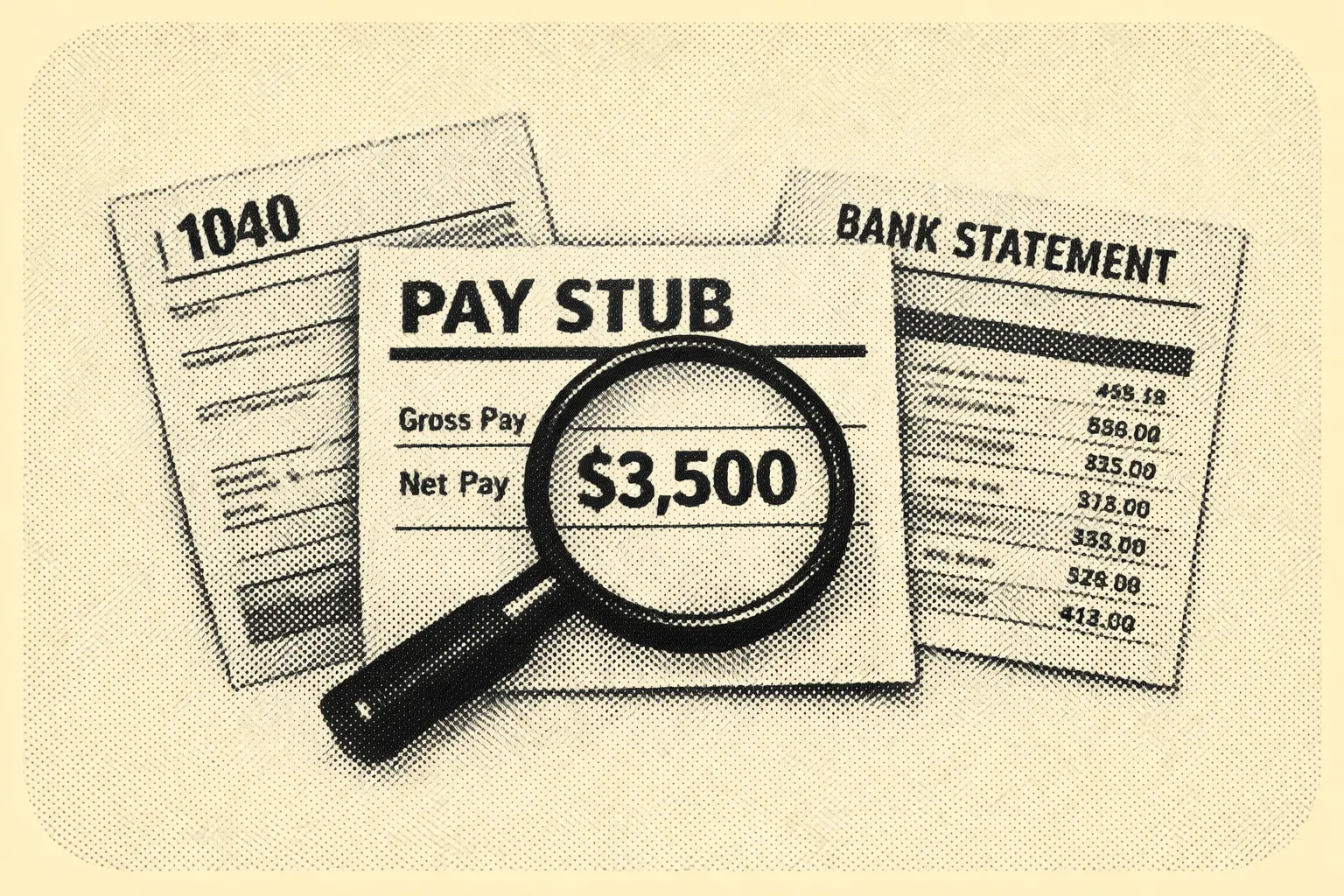
For W-2 employees, the standard package is two to three consecutive recent pay stubs and two months of bank statements showing payroll deposits at the corresponding frequency and net pay amount. An offer letter confirming the employment status and compensation rate is useful as a third source.
For self-employed applicants, the most reliable combination is the prior year tax return with all schedules and three months of business and personal bank statements showing consistent deposits.
For fixed-income applicants receiving Social Security, pension payments, or disability benefits, a benefit award letter downloaded directly from the agency's online portal combined with bank statements showing matching deposits provides reliable verification.
Step 3. Calculate the Rent-to-Income Ratio Using a Consistent Method
Apply the income standard using the same calculation method for every applicant. For employees with variable income components, use a conservative average of the trailing three to six months rather than a peak period. Document the specific income figure used, how it was calculated, and the resulting rent-to-income ratio.
Step 4. Verify Employment and Income Source Through an Independently Obtained Contact
For W-2 employees, verify employment through the main phone number of the employer obtained from a publicly listed source such as the company website rather than from the employment letter or pay stub. Confirm that the applicant is an active employee in the stated role. Log every verification attempt: the date, who was contacted, how, and what was confirmed.
For self-employed applicants, verify through a third source such as a business registration confirmation, client letters, or relevant licensing.
Step 5. Identify and Evaluate Document Red Flags
Pay stubs with identical net pay in every period despite variable hours are a common fraud signal. A calculation of whether the YTD earnings figure is mathematically consistent with the period earnings is one of the fastest fraud detection checks available. Bank statements with formatting inconsistencies across pages or deposit entries that do not correspond to the pay frequency described in the pay stubs warrant a pause and a request for clarification.
Step 6. Document the Decision and Apply the Standard Consistently
Complete the verification with a written record showing the income figure verified, the method of verification, the rent-to-income ratio calculated, whether the standard was met, any compensating factors applied, and the resulting decision. This record should be the same format for every applicant. If a consumer report contributed to the decision, FCRA adverse action requirements apply.
Income Verification Checklist
Pre-screen criteria: Written income standard documented. Income types accepted defined. Variable income averaging method defined. Treatment of voucher and subsidy income documented.
Document collection (W-2 employment): Two to three consecutive pay stubs. Two months of bank statements showing payroll deposits. Offer letter or employment confirmation.
Document collection (self-employed): Prior year tax return with all schedules. Three months of bank and business statements.
Document collection (fixed income): Benefit award letter from agency source. Bank statements showing matching deposits.
Calculation: Verified gross monthly income documented. Variable income calculated using defined averaging method. Rent-to-income ratio calculated and compared to written standard. Result documented in file.
Employment verification: Employer contacted through independently obtained contact. Confirmation documented with date, method, and outcome.
Document authenticity review: YTD figures mathematically checked. Pay frequency consistent with bank deposit pattern. Any anomaly documented and followed up.
Decision: Income standard met or not met documented. Compensating factor applied or not applied documented. File retained per retention policy.
Frequently Asked Questions
What is the standard rent-to-income ratio for rental applications?
The most commonly applied benchmark is gross monthly income of at least three times the monthly rent, corresponding to housing costs of approximately 30% of gross income. Your specific standard may vary but must be documented and applied equally to every applicant. For applicants using housing vouchers, apply the ratio to the tenant-paid portion of rent rather than the full contract rent to avoid source-of-income discrimination in jurisdictions that protect it.
What proof of income should a landlord accept for rental applications?
Acceptable proof depends on employment type. W-2 employees should provide consecutive pay stubs and bank statements showing corresponding deposits. Self-employed applicants should provide tax returns with all schedules and bank statements. Fixed-income applicants should provide benefit award letters and bank statements. Requiring the same documents for the same income type applied equally to every applicant satisfies both the verification goal and the fair housing consistency requirement.
How do landlords verify income for self-employed applicants?
Self-employed income verification relies on the prior year tax return with all schedules for an annual baseline and three months of bank statements showing recent cash flow. A conservative approach averages trailing six to twelve months of deposits rather than using a peak period. When additional confidence is needed, an IRS Form 4506-C authorizing transcript access can corroborate reported tax figures through official records.
What are the biggest income verification red flags to watch for?
The most reliable fraud indicators are YTD figures mathematically inconsistent with period earnings, identical net pay figures in every period despite variable hours, pay frequency that does not match bank deposit patterns, missing standard fields such as employer address or pay period identifiers, and bank statement formatting inconsistencies. Require consecutive documents and verify the basic arithmetic before treating any document as confirmed.
Can a landlord deny an applicant solely because of income?
Yes, if the denial is based on a consistently applied, written income standard supported by a documented calculation. The risk arises when the standard is applied selectively, when different documentation requirements are imposed on different applicants for the same income type, or when the income standard functions as discrimination based on source of income in jurisdictions that protect it.
Schedule a quick demo to receive a free trial and see how data-driven tools make rental management easier.